

Confidence Is a Skill: How Hockey Players Actually Build It
- Champions Hockey

- Dec 13, 2025
- 2 min read
Confidence is one of the most talked-about traits in hockey, yet it is often misunderstood. Players are told to “be confident” or “play with confidence” as if it is something you either have or you don't.
In reality, confidence is a skill. And like any skill in hockey, it has to be built through the right habits, environments, and repetitions.
Confidence Comes From Preparation, Not Hype
True confidence is not loud. It does not come from pre-game speeches or social media clips. It comes from knowing you have done the work.
When players repeat skills at game speed, receive feedback, and see progress over time, confidence grows naturally. They trust their skating. They trust their hands. They trust their decisions.
This is why purpose-driven training matters. Random reps do not build confidence. Quality reps do.

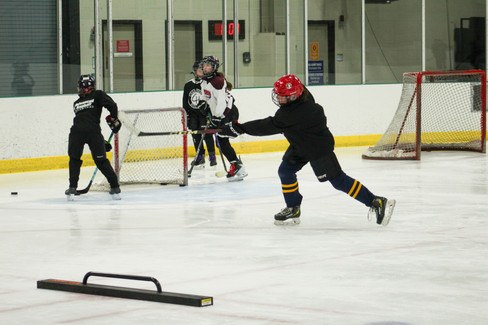


Repetition Builds Belief
Every confident player shares one thing in common. They have done the same skills thousands of times in challenging environments.
Repetition builds familiarity. Familiarity builds comfort. Comfort allows players to play fast without hesitation.
At Champions, drills are designed to progress. As players master one layer, we add pressure, pace, or decision-making. This helps athletes learn to execute under stress, which is where confidence truly shows up in games.
Feedback Turns Effort Into Growth
Confidence does not grow when players are left guessing.
Clear, specific feedback helps athletes understand what they are doing well and where they can improve. When players know exactly what success looks like, they are more willing to take risks and push themselves.
This is especially important for young athletes. Confidence is not built by avoiding mistakes. It is built by learning how to respond to them.





Safe Environments Create Brave Players
Players will not play confidently if they are afraid of making mistakes.
A strong development environment encourages effort, accountability, and learning. Mistakes are treated as information, not failure. This allows players to compete, experiment, and grow without fear.
When athletes feel supported, they play faster, harder, and more instinctively.
Confidence Looks Different at Every Age
Confidence at U9 might look like trying a new move
At U11, it might be holding onto the puck a little longer
At U13, It could be making plays under pressure
At U15 and beyond, it is about consistency and composure
Development is not one-size-fits-all. Confidence grows when training matches the athlete’s stage, not when they are rushed or labeled too early.
Confidence Carries Over Everywhere
Players who train with confidence do not just perform better in games. They become more coachable, more resilient, and more accountable.
They understand that confidence is earned daily through preparation, effort, and habits.
That is a skill that lasts far beyond hockey.
Final Thoughts
Confidence is not something players wait for. It is something they build.
With the right structure, feedback, and environment, every athlete has the ability to develop confidence in their game. At Champions Hockey, that process is intentional, progressive, and rooted in long-term development.


Comments